






FAO Brief on the interruption of the Black Sea Grain Initiative and its potential implications on global food markets and food security
Chief Economist Office
31st July 2023
The implementation of the Black Sea Grain Initiative (BSGI) needs to continue– including the renewal of Russian security guarantees for navigation in the northwestern part of the Black Sea. It is important for all parties to ensure renewal of the deal and the Initiative, and as mentioned by the United Nation Secretary-General, António Guterres; “our goal must continue to be advancing global food security and global food price stability”.
Background of the Black Sea Initiative
The BSGI, or the Agreement on the Safe Transportation of Grain and Foodstuffs from Ukrainian Ports was launched by the United Nations, Türkiye, the Russian Federation and Ukraine on 22 July 2022. It successfully enabled the resumption of exports of grains, other foodstuffs and fertilizers, including ammonia, through a safe maritime humanitarian corridor from three key Ukrainian ports, Chornomorsk, Odesa and Yuzhny/Pivdennyi. In addition, a Memorandum of Understanding was signed between the Russian Federation and the Secretariat of the United Nations on promoting Russian food products and fertilizers to the world markets.
Prior to the onset of the war, maritime shipments through the Black Sea accounted for at over 90 percent of Ukraine’s agricultural commodity exports. Markets and farmers in Ukraine reacted with a great relief when, on 22 July 2022, the so-called Istanbul Agreements were signed.
Two distinct sets of agreements were signed in Istanbul: (a) Agreement on the Safe Transportation of Grain and Foodstuffs from Ukrainian Ports (Black Sea Grain Initiative - BSGI). The Parties to this Initiative are the Republic of Türkiye, the Russian Federation, and Ukraine as proposed by the Secretary-General of the United Nation. In the Initiative, the parties recognized the role of the UN Secretary-General in securing the discussions and requested his assistance in its implementation; and (b) Memorandum of Understanding between the Russian Federation and the Secretariat of the United Nations on promoting Russian food products and fertilizers to the world markets.
The BSGI was negotiated under the auspices of the UN Secretary-General within existing maritime laws. In particular, paragraph 2 of the BSGI states: “This Initiative is based on agreements of parties of the International Convention for the Safety of Life at Sea, 1974, as amended, (SOLAS), Regulations XI-2/11 and the International Ship and Port Facility Security Code (ISPS Code), Part B, paragraph 4.26”
The Initiative was extended by 120 days in November 2022. However, an extension of only 60 days was agreed in March 2023, and again in May 2023. The latest extension of the Initiative expired on 17 July 2023, and the Russian Federation decided not to renew it. Prospects of additional renewal remain unclear despite continuing consultations and negotiations.
This brief analyzes the achievements as well as the impacts of the non-renewal of the initiative.
The achievements of the BSGI
Despite the war in Ukraine, the BSGI ensured food access to a number of critical destinations and guaranteed market stability.
The Russian Federation and Ukraine are among the most important exporters of agricultural commodities in the world. Both countries have been net exporters of agricultural products and leading global suppliers of foodstuffs. Between 2017 and 2021, the two countries accounted, on average, for 8.8 percent of the global output of barley, maize and wheat, with the Russian Federation accounting for 5.4 percent and Ukraine for 3.4 percent. Their role in global trade of grains is more pronounced: during the same period, they represent 21.9 percent of the global exports of barley, maize and wheat, with the Russian Federation accounting for 10.3 percent and Ukraine for 11.5 percent.
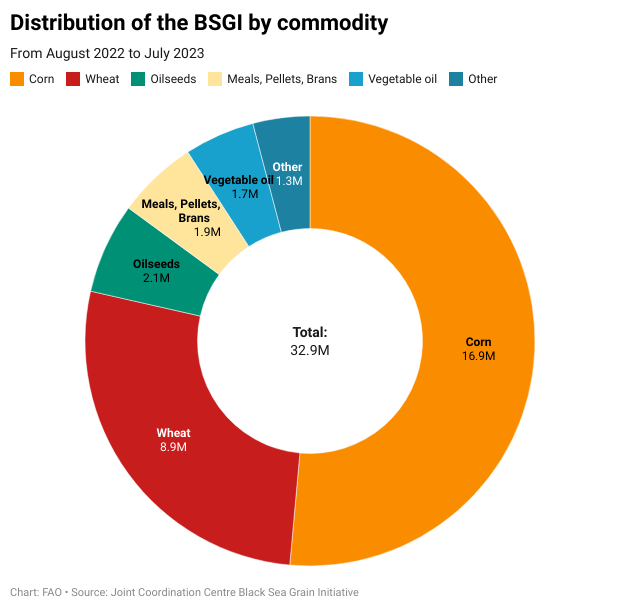
The Initiative has further ensured the safe passage and has contributed to the decrease in key agricultural commodity prices by bringing to the markets 32.9 million tonnes of grains and oilseeds from Ukrainian ports (Figure 1).
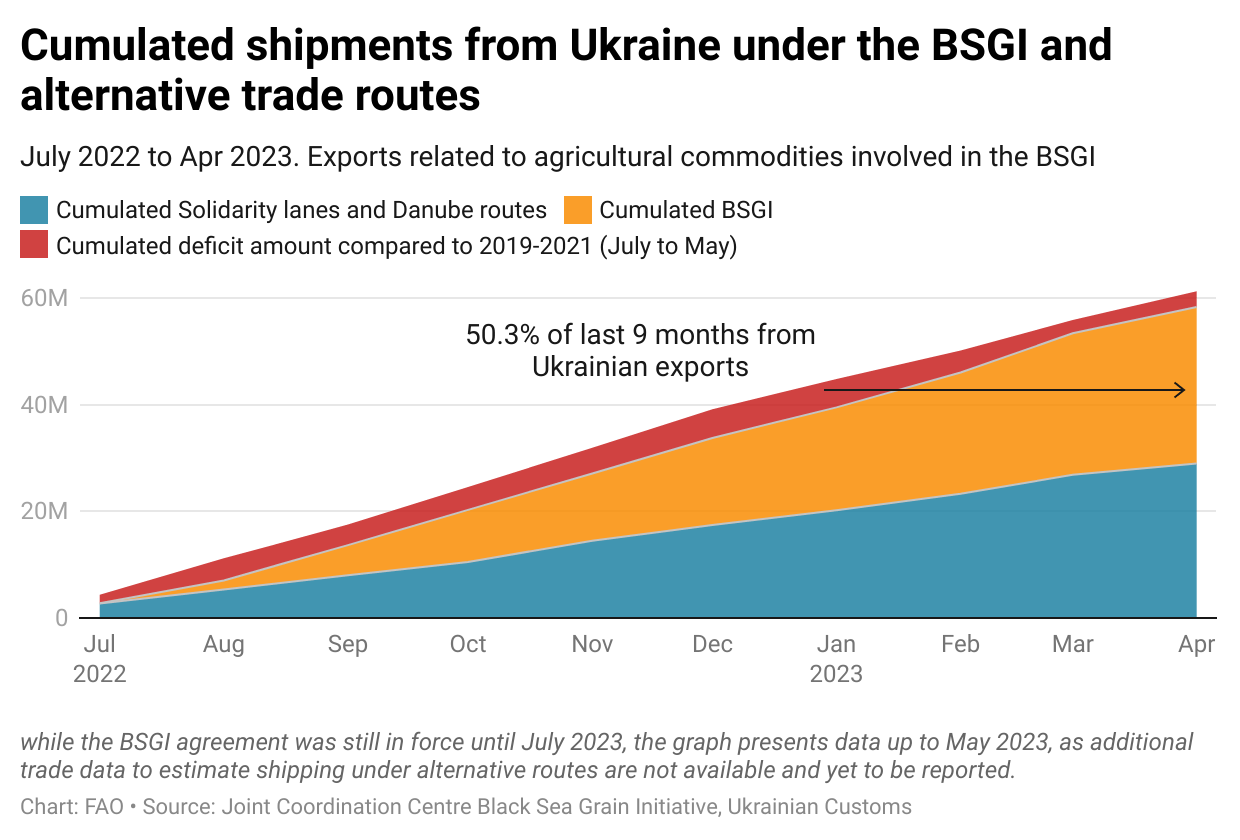
From 1 July 2022 to the end of May 2023, 50 percent of Ukrainian exports for oilseeds, grains, pulses and derivatives relied on the BSGI. The 32.9 million tonnes of agricultural goods exported under the agreement augmented the roughly 3 million tonnes of similar agricultural products exported monthly through the Solidarity Lanes - overland routes through Eastern Europe - as well as through the Danube River (Figure 2). The combined effects allowed reaching pre-war level (96 percent of 2019-2021 level).
Ukraine was able to move the 2022 harvest to markets, freeing up storage space that had been saturated when the country was unable to ship through the Black Sea (February to July 2022). During this period, FAO addressed the urgent needs in terms of storage facilities with a Rapid Response Plan and Grain Storage Support Strategy, designed for transitory solutions. With the suspension of the BSGI, new solutions need to be put in place. The agreement also allowed to restore proper level of income and incentives for Ukrainian farmers. For instance, Ukraine FOB wheat price fall to 250 dollars per tonne on the eve of the BSGI (22 July 2022), and increased to 325 dollars per tonne after.
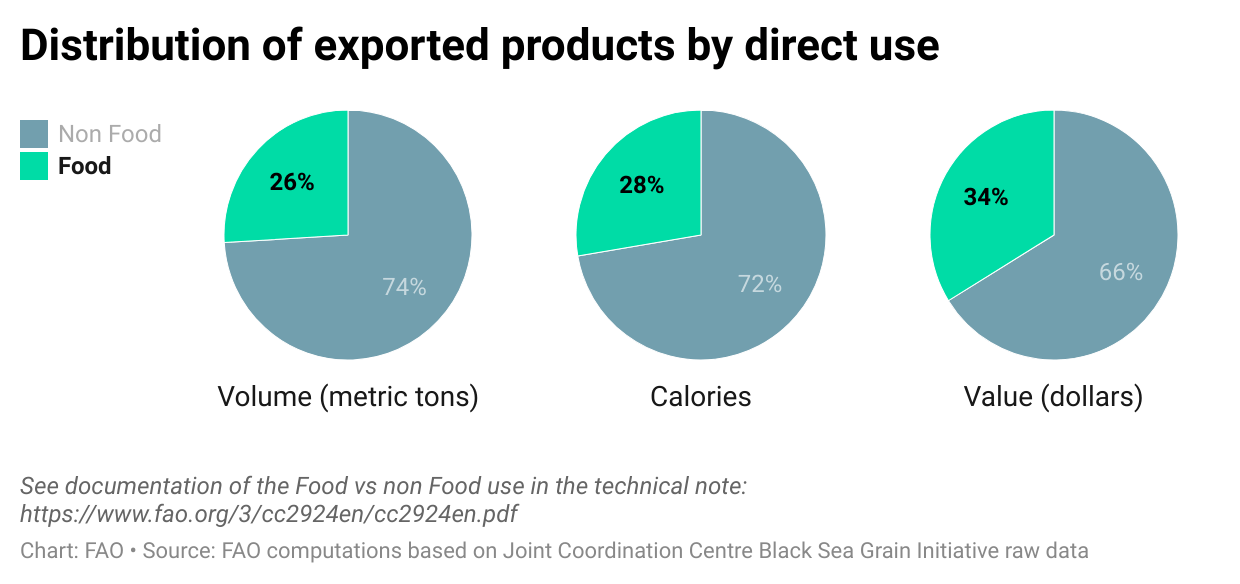
On a tonnage basis, maize and wheat accounted for roughly 78 percent of total agricultural products exported through the BSGI (Figure 1). Due to the important role of maize, oilseed meals and the utilization of wheat by some exporters, only one-third of the exported products are used as food for direct human consumption (Figure 3).
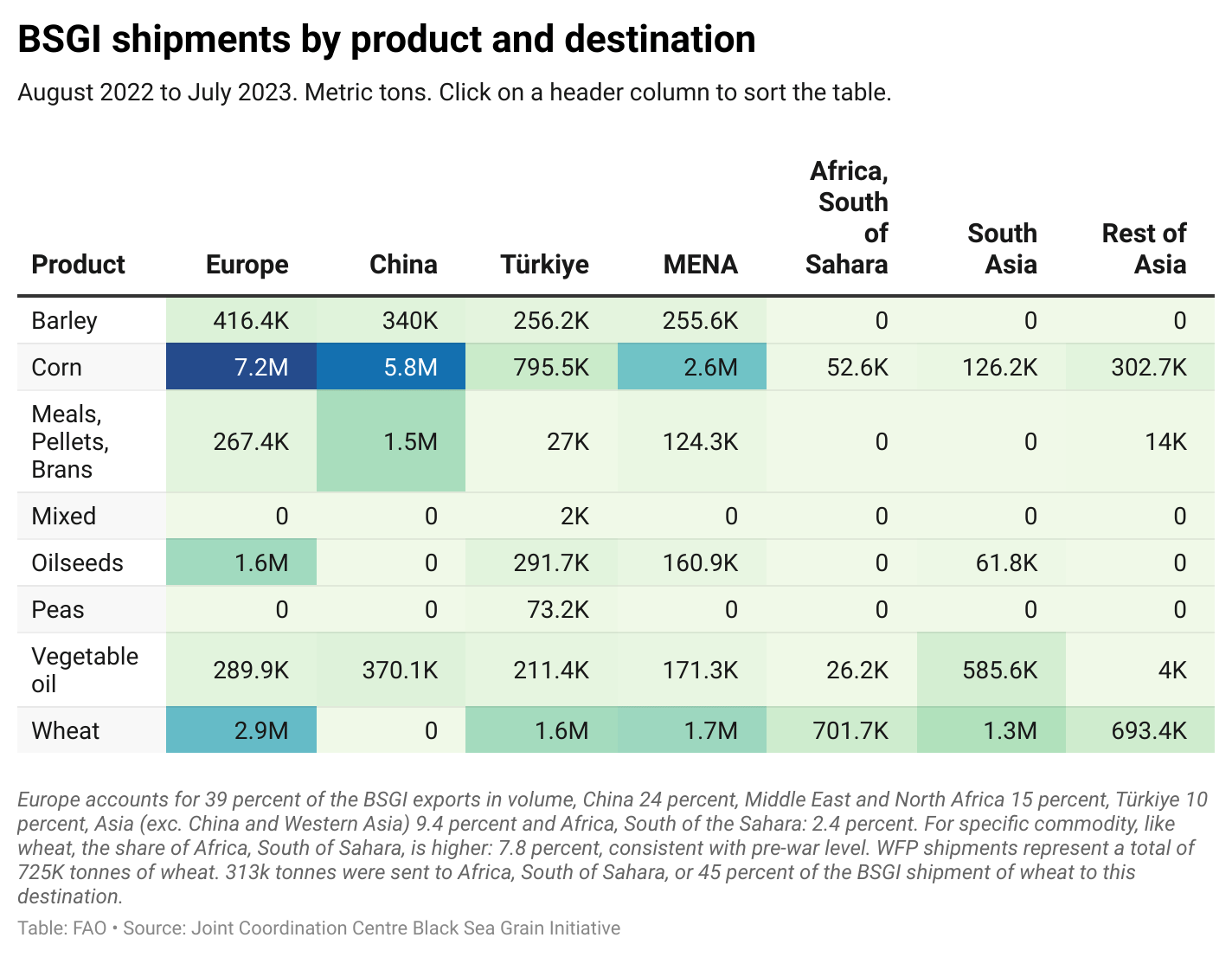
The commodity pattern largely influences the destination of these products with 53 percent, in volume, of the exports going to Europe and China (see Table 1). Africa, South of Sahara represents
2.4 percent of the total volume, but 7.8 percent of the wheat shipments under the BSGI.
In addition, The World Food Programme (WFP) has shipped more than 725,000 tonnes of wheat (Table 1) to support humanitarian operations – relieving hunger in some of the hardest hit corners of the world, including Afghanistan, the Horn of Africa and Yemen.
Potential impacts of the interruption of the BSGI
The current interruption will generate instability in markets and a significant negative effect on humanitarian aid. International prices for key food commodities are likely to fluctuate depending on whether Ukraine’s exports are expected to remain on the market, in combination with the evolution of cropping conditions in other large producing countries.
The scale of the impact of a protracted BSGI interruption could be exacerbated as the world has in recent years been facing multiple crises, such as the COVID-19 Pandemic, economic downturns, climate extremes and conflicts. As shown in the last edition of the State of Food Security and Nutrition in the World (SOFI) 735 million people on average are suffering from chronic hunger, 122 million more people compared to 2019. Acute food insecurity is also rising among the most vulnerable counties.
While FAO does not envisage any risk to the global availability of food in the short term, food access and affordability are concerning and the negative impact on the resilience of the agrifood systems should not be underestimated.
Our focus should be on the most vulnerable nations and the most vulnerable groups already suffering from food insecurity and malnutrition. This includes Ukrainian farmers who, in addition to the war, face uncertainties due to increased stockpiles, lack of storage facilities, reduced income, and potential reduction in their production of 2023-24. The timing of the current interruption is particularly problematic since harvest has started in Ukraine, and there is a need to guarantee proper income and incentives for Ukrainian farmers to prepare the next planting season during the fall.
Benefits of the renewal of BSGI and strengthening of additional support measures for vulnerable economies
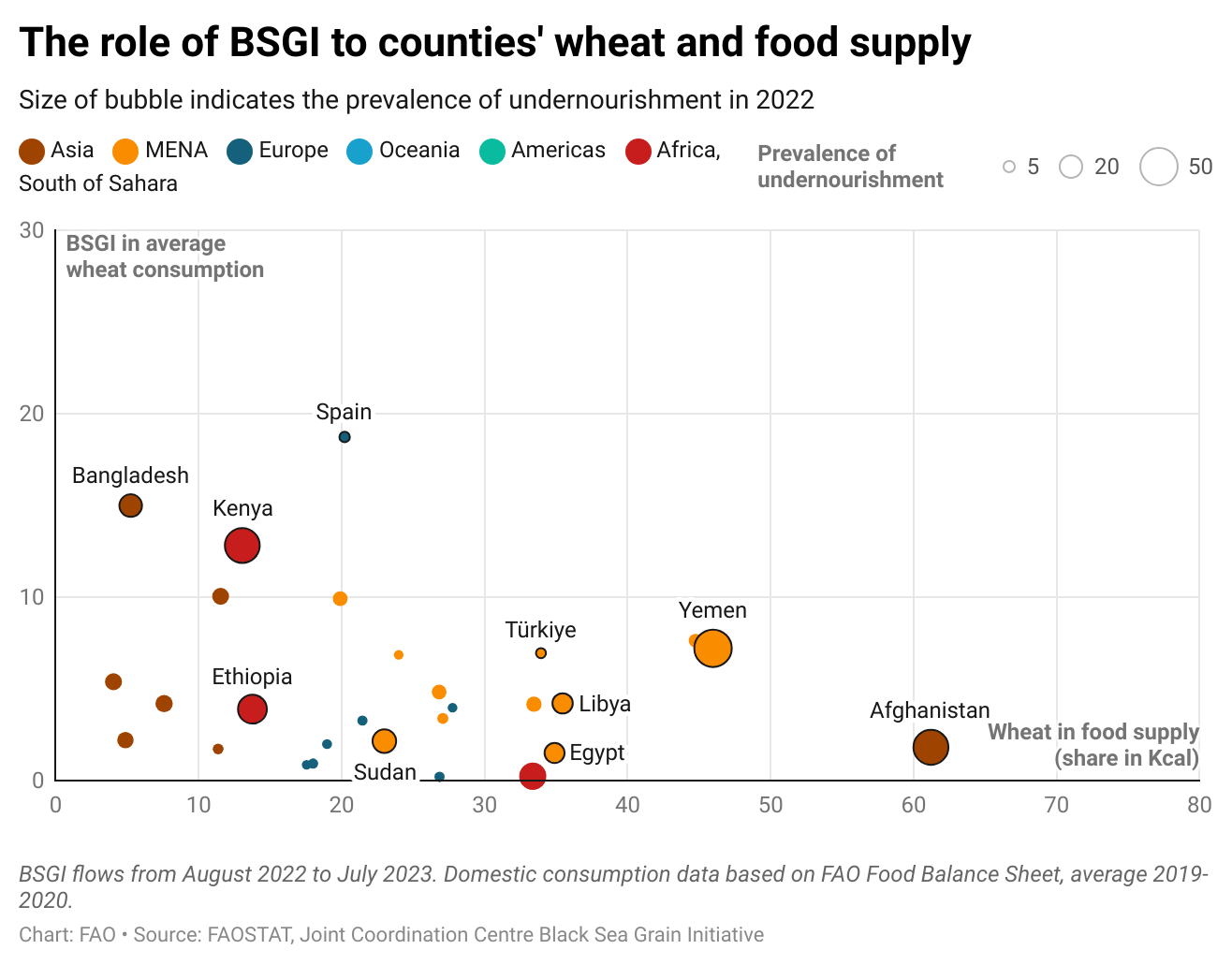
The renewal of BSGI will contribute to dampening international prices and improve access and affordability of agricultural products for low and lower-middle-income countries. Many of these countries are already in dire macroeconomic situation, facing high level of debt, and higher import costs or economic volatility will significantly deteriorate their capacity to support their population. As shown in Figure 4, a few countries with important undernourishment issues like Kenya or Bangladesh, have benefited from the BSGI to maintain a good supply of wheat, while their overall consumption is still dependent of this commodity. Other countries like Yemen or Afghanistan present a different type of vulnerability, even though the BSGI is playing a small role, below 8 percent of their overall wheat supply, both countries have very high level of undernourishment and are highly dependent on wheat in their diets, therefore any disruptions could translate in dire consequences for the population.
To address this problem, FAO in 2022 proposed a special credit line, known as the Food Import Financing Facility (FIFF) to be extended to low-income countries facing acute food import needs. FAO acknowledges the efforts of the IMF to implement a similar measure and welcomes its decision to maintain this mechanism for six additional months.
The renewal of BSGI will prevent a sharp decrease in agricultural production in Ukraine, which is vital for the world, considering its critical role in supplying oilseed and grain to the global market. Its suspension in addition to the war, is posing an additional challenge to the farmers due to higher logistics’ costs to export through alternative routes, means and initiatives. All existing initiatives are more costly with much less absorption capacity compared to the BSGI. The alternative routes would require increased logistical services and its associated costs would have an impact on international prices.
The renewal of the Agreement and the resumption of BSGI are important for the global agrifood systems that are already under the pressure of climate shocks including but not limited to El Nino in 2023-24. Further decrease of Ukrainian agricultural products from the global market while the world is experiencing low level of stocks (e.g., grain) poses a huge risk to global food security.
BSGI has been criticized for disproportionate exports to developed countries and emerging economies (Table 1), and the fact that not all exports through the Initiative have been directed to developing countries.
But it should be noted that the main objective of such an Initiative is and should be to ensure global price and market stability, from which the poorest and the countries in need will benefit the most. Increased exports from Ukraine even if a lower share of supply is to be exported directly to developing nations, will contribute to and meet this purpose-as it has proven to be the case; improving access to food and ensuring price and market stability.
Last year, one in eleven people went to bed hungry, while nearly 3.1 billion people – or 42 percent
- survived on starchy staples because they could not afford fruits and vegetables. At an estimated 735 million in total, this represents barely any change from last year, and is 122 million more than
in 2019, before the pandemic, several extreme weather events and the war in Ukraine. Africa is the worst affected continent, with nearly 1 in 5 people there not getting enough calories - more than double anywhere else. In addition, although overall global numbers remain steady, in Africa, as well as in Western Asia and the Caribbean, the number of hungry people is actually rising.
To feed the rapidly growing population of the world we would need all key actors, stakeholders, agricultural producers and exporters working in close cooperation. Any disruption would only worsen the already challenging situation. The renewal of BSGI and free mobility of food and agricultural inputs are necessary for global food security.